

“The thing I’ll remember most about the flight is that it was fun… the most fun that I’ll ever have in my life.” – Sally Ride
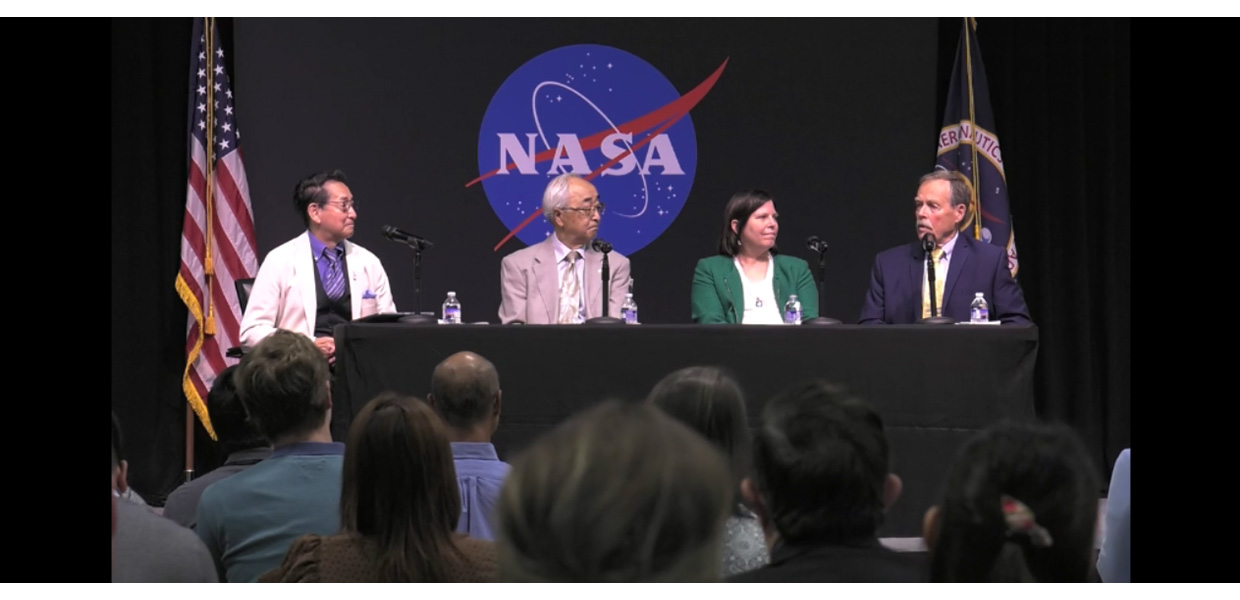
HUNTSVILLE — It was fun again at the Marshall Space Flight Center when Dr. Mamoru “Mark” Mohri, the first Japanese astronaut to fly on the space shuttle, was the featured guest at the Asian American & Native Hawaiian Pacific Islander Heritage Month event.
Mohri was reunited Wednesday with team members from STS-99 Flight Day 4 of the Endeavor Shuttle Radar Topography Mission in 2000, the last mission before the shuttles began servicing the International Space Station.
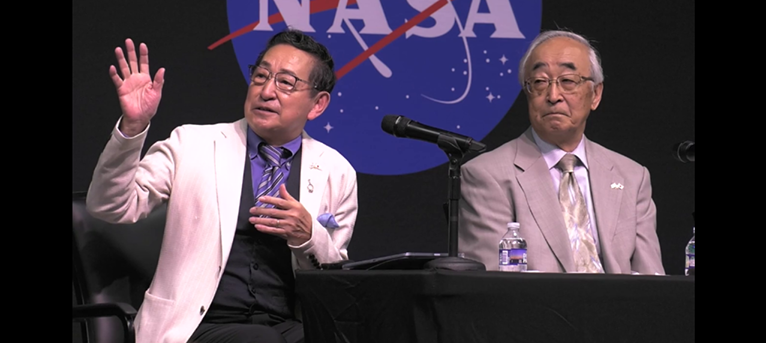
“It was great (reuniting),” said Mohri, a former National Space Development Agency astronaut. “Through the years we worked together in space but the reunion with not only our crew members, but our support engineers too and we all met together after all those years at Marshall Space Flight Center.”
He participated in a panel discussion, sharing his experience on that shuttle mission with the Marshall workforce.
The Endeavor crew members on the panel included retired NASA Astronaut and Mission Commander Robert “Hoot” Gibson, who served as commander on the space shuttle, and Marshall Engineer Tia Ferguson.
Ferguson spent four weeks in Antarctica with a team of scientists and engineers to recover a science experiment that was attached to a high-altitude balloon.
Both have experienced spending time in extreme environments.
“I learned a lot through my training at NASA big picture, and I think part of this big picture you know your work is not only limited to your job or organization, but as far as space goes, you are representing all human beings,” said Mohri. “Learn to think ahead – we confront so many difficulties and sometimes those difficulties are dangerous in space – so thinking ahead is very important.”
He uses COVID 19 as an example.
“All the world suffered for three years or more,” he said. “Then it was necessary that we think ahead, and whatever is happening next, we have to prepare for that.”


